LAND ACKNOWLEDGMENT
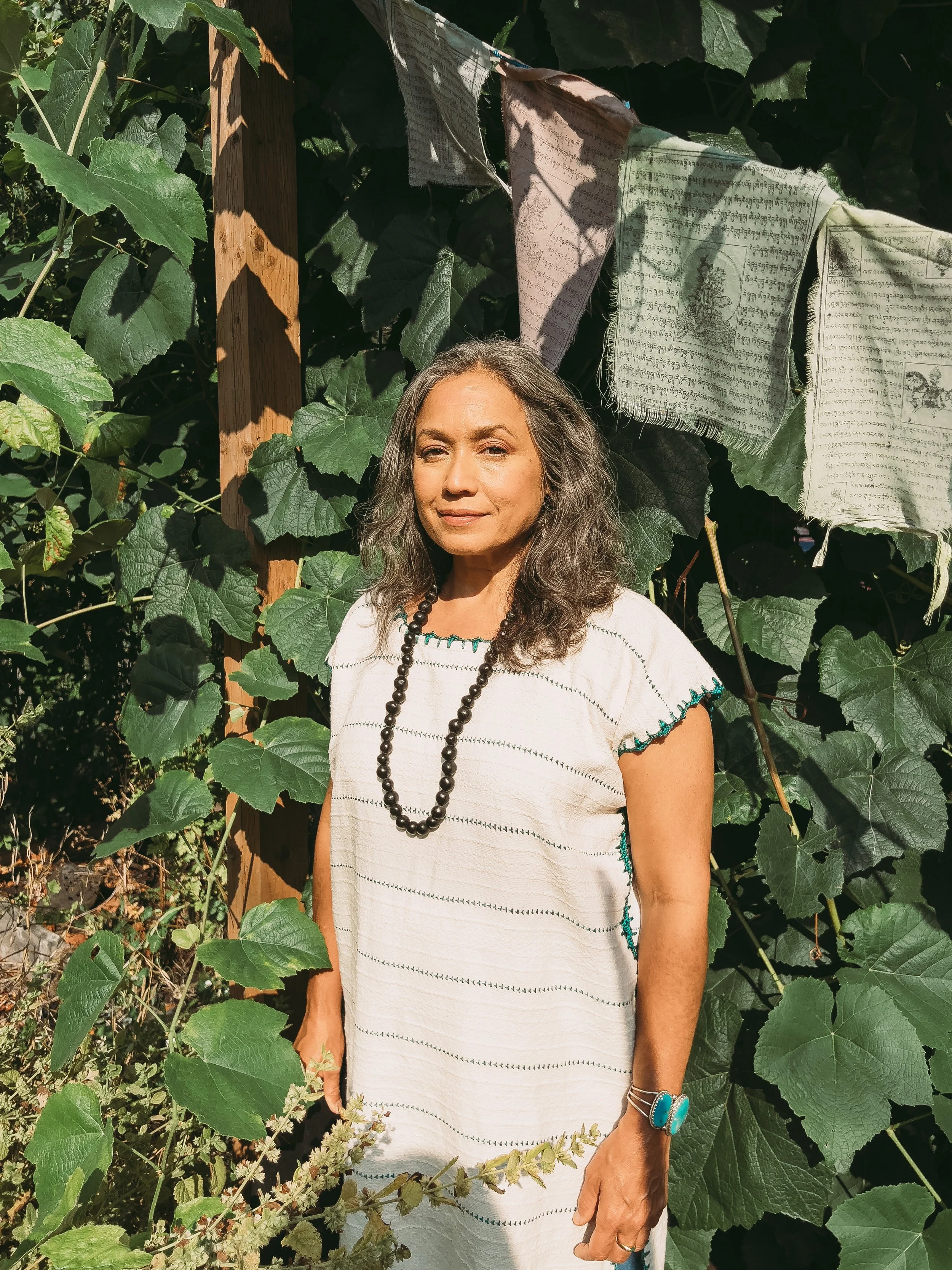
Maribel is settler on the lands of the Kalapuyans, Yoncalla, the Southern Molalla, the Upper Umpqua, the Cow Creek Umpqua, and the Quuich, or Lower Umpqua.
When the colonial settlers arrived, the people of the Umpqua River Basin lived peacefully with one another, not claiming land or territory. Of the Kalapuya people, there may have been twelve to thirteen different groups. They subsisted from fishing, game hunting, and foraging on the abundant lands. Although many Indigenous people were violently uprooted and moved to reservations such as Grand Ronde, Siletz, Cow Creek, and Yamhill, the people still partake in these traditional life ways, despite colonial attempt to decimate people, culture, language, and ways of existing in reciprocity within their ancestral homelands.
When the settlers came, they allowed them in and many befriended the white settlers, as in the case of the Yoncalla, building relationships with them and helping them on their homesteads.
Colonization took hold of the area when the Hudson Bay Company established a fur trading outpost – Fort Umpqua – which became the town now known as Elkton. This trading post became a hub of activity and commerce that made the fort a desirable stopping place for travelers. Eventually, the growing populations of settlers, claiming land for agriculture and logging, depleted food sources for the tribes of the Basin. With food scarcity and without understanding the concept of land ownership or the practice of not sharing large bounties of food with those who did not have any, some of the native people began to take from the settlers, who already perceived them to be inferior, uncivilized, and lawless. These original peoples did not understand why the white settlers viewed them with such disdain, why they pushed them out the lands, and why they did not openly share their bounty.
During the Rogue River Wars, removal of Indian populations gained momentum in an effort to eliminate the recruitment of men to fight on the side of the Rogue River confederacy. Forced removal of Natives began with the creation of the Umpqua Reservation in 1853. The Cow Creek Reservation was established in 1854 and a third reservation, The Umpqua Reservation of the Coast, in 1856. By 1856 the Umpqua River basin was mostly depopulated of its native peoples, except for a few families that managed to stay and work for white settlers.
Not having access to their traditional methods of obtaining sustenance, people in many reservations were forced to receive sustenance provided by the U.S. government or adopt the agricultural lifestyle of the white settlers – their ways of existing sustainably with the land for thousands of years were violently disrupted. The peoples in the coastal reservations still had access to traditional ways for sustenance. In 1856, white militant groups, determined to exterminate all native people, consistently attacked Indian reservations.
One of the reservations targeted was the Umpqua Reservation and its people, many who had already attempted to establish themselves by growing crops and owning livestock, were forced to take a 23-day journey in the harsh Oregon winter without proper attire, to the Grand Ronde Reservation in the Yamhill valley. Five people are said to have died on this journey, including children. Other Oregon tribes were forced to move to the Grand Ronde reservation in the following years. White settler attacks on Grand Ronde continued and armed men were recruited to defend the reservation. Eventually, a fence was built around the reservation for protection.
Today, Indigineous peoples from the Umpqua River Basin and across Turtle Island, continue to uphold their lifeways, to reclaim, study, and remember language and cultural practices, as well as engage in advocacy for youth, Missing and Murdered Indigenous Women (MMIW), Land Back movements, and Nature rights.
Our family is grateful to temporarily dwell as settlers on the lands of our Indigenous neighbors and hope to do so with honor, respect, and reciprocity. We support Indigenous resistance and pathways to the restoration of rights and lands to the rightful stewards.